
Small lot

Small Lot Manual

Section 1: Swing legislation

Section 2: Getting started

  • 2.1 Why pigs?
  • 2.2 Common breeds
  • 2.3 Understanding production goals
  • 2.4 Buying & selling pigs
  • 2.5 Record-keeping

Section 3: Production economics

  • 3.1 Key factors for success
  • 3.2 Record-keeping basics
  • 3.3 What is an enterprise budget?
  • 3.4 Direct expenses (variable costs)
  • 3.5 Indirect expenses (fixed costs)
  • 3.6 Capital expenses (depreciation & investment)
  • 3.7 Labour expenses
  • 3.8 Focusing on the right information
  • 3.9 Instructions – enterprise budget worksheet

Section 4: Housing & management

  • 4.1 Fencing & Protection from predators
  • 4.2 Housing
    • Shelters – Indoor & Outdoor
    • Space
    • Bedding & wallowing
    • Supplemental heat
    • Lighting
    • Ventilation
    • Housing sows
  • 4.3 Hygiene
    • Cleaning & disinfection
    • Rodent & pest control
  • 4.4 Hospital pens
  • 4.5 Social interactions
  • 4.6 Animal handling & safety
    • Pig tips
    • Equipment

Section 5: Nutrition & feeding management

  • 5.1 Nutrition basics & requirements
  • 5.2 Feed safety
  • 5.3 Water
  • 5.4 Pastured pigs
  • 5.5 Body condition scoring

Section 6: The pig – What to expect

  • 6.1 Reproduction management
    • Puberty & sexual maturity
    • Female estrous or fertility cycle
    • Female estrus or “heat”
    • Breeding
    • Boar care
  • 6.2 Pregnancy/gestation
    • Pregnancy confirmation
    • Gestation
  • 6.3 Gestation complications
    • Sick gilt/sow
    • Discharge
    • Abortion
  • 6.4 Farrowing
    • Pre-farrowing preparation
    • Farrowing
    • Post-farrowing sow care
  • 6.5 Farrowing & post-farrowing complications
    • Dystocia/labour difficulty
    • Prolapses
    • Mastitis or agalactia “no milk”
    • Savaging piglets
    • Laid on piglets
  • 6.6 Sow lactation
  • 6.7 Piglets days 1 to 4
    • Colostrum
    • Iron
    • Processing
    • Piglet behaviour
    • Fostering
    • Environment
  • 6.8 Days 4 to weaning (at days 21 to 50)
    • Piglet behaviour
    • Creep feed
    • Weaning
  • 6.9 Weaner to grower
    • Pig behaviour
    • feeding
    • environment
  • 6.10 Grower to finish
    • Pig behaviour
    • feeding
    • environment
  • 6.11 Getting ready for market
  • 6.12 Raising breeding animals
    • Feeding

Section 7: Swine health

  • 7.1 Herd health
  • 7.2 Herd health exam
  • 7.3 Pigs – identifying normal vs. abnormal
  • 7.4 Disease spread
  • 7.5 Public health
  • 7.6 Reportable diseases & foreign animal diseases
  • 7.7 Common diseases of outdoor pigs
  • 7.8 Disease management
  • 7.9 Veterinary diagnostics

Section 8: Biosecurity

  • 8.1 What is biosecurity?
  • 8.2 Why is biosecurity important?
  • 8.3 Biosecurity on your farm
    • Farm layout
    • Fencing & signs
    • Cleaning & disinfecting
    • Visitors
    • Sourcing animals – auction marts
    • Quarantine
    • Disease surveillance
    • Trailers
    • Feed & water
    • Other animals
    • Manure management
    • Deadstock handling & disposal

Section 9: Wild & feral pigs in Canada

  • 9.1 Wild & feral pigs in Canada
    • What is the risk?
    • What are wild pigs?
    • Why are they a concern?
    • Where are wild pigs?
  • 9.2 What are the disease concerns related to wild pigs?
  • 9.3 What is the financial cost of wild pigs?
    • What is being done to control wild pigs in Canada?
    • Where to report wild pig sightings in B.C.?
  • 9.4 What can I do to protect my pigs & the Canadian herd from wild pigs?

Section 10: Marketing hogs

  • 10.1 Slaughter plant biosecurity
  • 10.2 When is my pig ready for market?
  • 10.3 Slaughter plant classes/licenses
  • 10.4 Slaughter plant preparation
  • 10.5 Food safety
  • 10.6 Emergency euthanasia
  • 10.7 Attaining registered commercial produucer status in B.C.

Section 11: Transporting pigs

  • 11.1 Transportation basics
  • 11.2 Transport biosecurity
  • 11.3 Fit to transport
  • 11.4 Federal transport regulations

Section 12: Humane euthanasia

  • 12.1 Euthanasia plan
  • 12.2 Deciding to euthanize
  • 12.3 Methods of euthanasia
  • 12.4 How to euthanize pigs
  • 12.5 Confirmation of death
  • 12.6 Disposal of deadstock

Section 13: Emergency management

  • 13.1 Farm hazards – emergency planning
  • 13.2 Serious animal diseas outbreak – emergency planning
    • 1. Understand
    • 2. Prepare
    • 3. Respond
  • 13.3 Serious animal disease outbreak: what should I do?
  • 13.4 Emergency preparedness tips – all emergencies
  • 13.5 Emergency management for agriculture in B.C.

References


Biosecurity

Why is biosecurity so important?
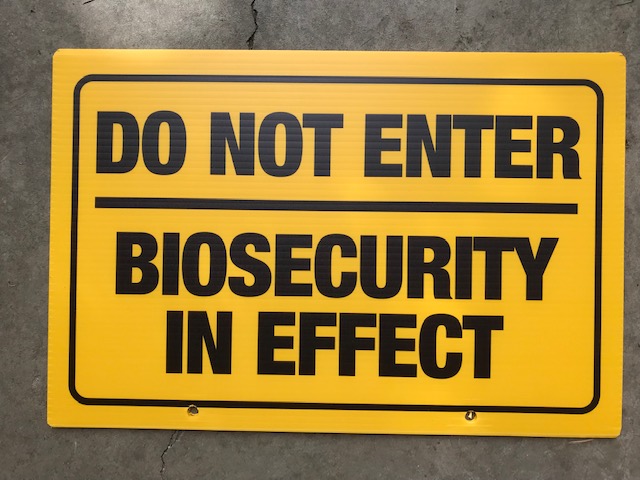
Biosecurity is critical to help minimize the spread of multiple diseases in the swine industry. The list of diseases is long, and they can be very devastating for the barns and/or the industry. Some example of diseases would be Porcine Respiratory and Reproductive Syndrome (PRRS), Porcine Epidemic Diarrhea (PED), African swine fever  (ASF) or Foot and Mouth Disease.

The impact of such diseases in barns that have never been exposed is huge: increase in mortality (PED, for example, affects young animals very severely with 100% loss for piglets under 10 days of age), loss in production (PRRS can cause abortions and poor reproduction in sow herds), increase in medication cost (to help alleviate the disease and minimize losses), etc. Depending on the disease, the stage of production and the size of the barn, an outbreak could cost a producer anywhere from a few thousand to millions of dollars.


African Swine Fever (ASF)

African swine fever (ASF) is a viral disease that only impacts pigs. As it spreads around the globe, it poses a significant risk to the health of the Canadian swine herd, the pork industry and the Canadian economy.